Conure Care Guide for Beginners
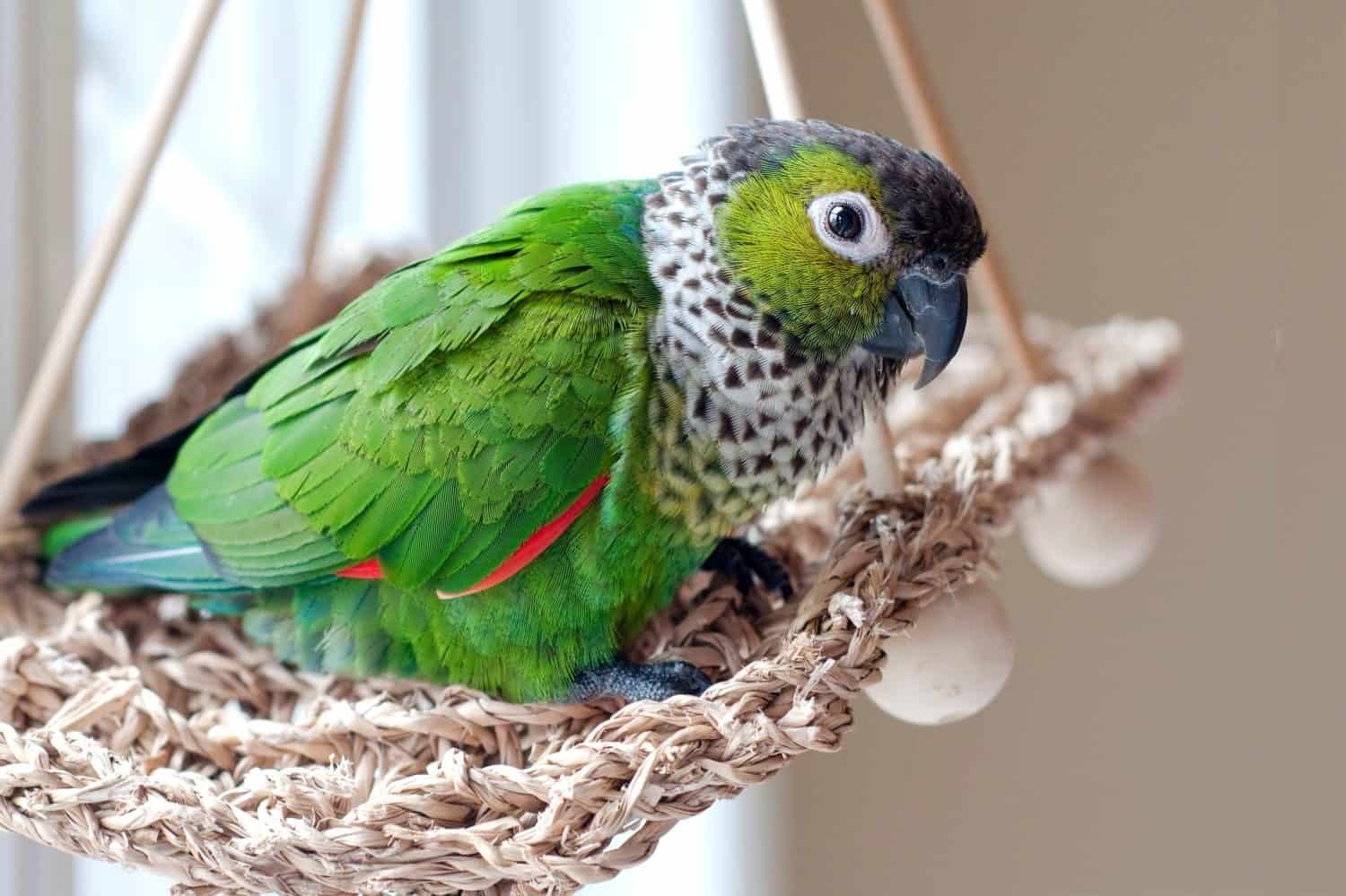
My Green Cheek Conure has a nickname in my house: the tiny clown. Nothing captures her personality better. She’s small, endlessly curious, and has a habit of hanging upside down from her cage bars for no apparent reason other than that she finds it entertaining. When I first got her, I underestimated how much personality could fit into such a small bird, and honestly underestimated how much care she’d actually need despite her size.
If you’re considering a conure, here’s what I’ve learned actually matters, based on a few years of living with mine.
Conures Are Smaller, Not Lower-Maintenance
This was my first misconception. Because conures are considerably smaller than macaws or African Greys, I assumed the care level would scale down proportionally. It doesn’t, not by much anyway. Conures are just as social, just as prone to boredom-related behavior issues, and just as capable of forming strong bonds and, if neglected, developing genuine behavioral problems as their larger cousins.
Cage Setup for Conures
While conures don’t need macaw-sized enclosures, they still need more space than their size might suggest, since they’re active, acrobatic birds that spend a lot of time climbing, flying short distances within the cage, and playing. A cage that feels appropriately sized on paper but doesn’t allow for real movement tends to leave them under-stimulated.
My conure’s cage includes multiple perch heights, a few swinging toys, and a corner she’s claimed as her own for shredding paper, an activity she seems to genuinely enjoy and one that keeps her occupied for a good chunk of the day.
Diet for Conures
Like most parrot species, conures do best on a pellet-based diet supplemented with fresh vegetables and limited fruit, rather than a seed-heavy mix. Conures in particular seem to enjoy a wide variety of foods once they’re introduced to them gradually, mine went from being a picky eater who mostly wanted seed to genuinely looking forward to fresh vegetables once I started offering small amounts consistently alongside her usual food.
The Noise Level Reality
Conures, despite their small size, are known for having surprisingly loud voices, sometimes described as having a big bird’s voice in a small bird’s body. This isn’t constant screaming under normal circumstances, but they do have a distinct, sometimes piercing call, particularly during excitement or when seeking attention.
Mine has specific calls for different situations, an excited chirp when I come home, a sharper call if she wants attention and isn’t getting it. It took time to learn to distinguish these, and honestly, it’s part of what makes her feel like such a genuine companion rather than just a pet in a cage.
Social Needs and Bonding
Conures bond closely with their owners and generally do best with regular daily interaction. Mine gets time outside her cage every day, sometimes just perched on a playstand near where I’m working, sometimes actual interactive play. Skipping this for more than a day or two noticeably affects her mood, she becomes more vocal and seems restless when she hasn’t had enough engagement.
Playfulness and Enrichment
If there’s one word that describes conures as a group, it’s playful. Mine genuinely enjoys toys that involve problem-solving, foraging toys where she has to work to get a treat, or things she can shred and destroy, which seems to be a deeply satisfying activity for her regardless of the specific object involved.
Rotating toys regularly keeps this enrichment fresh. I noticed early on that leaving the same toys in her cage for too long led to boredom-related nipping and general restlessness, something that improved considerably once I started swapping items out every week or so.
Common Health Signs to Watch
Conures, like other parrots, tend to hide illness until it’s fairly advanced. Watching for changes in droppings, appetite, activity level, or unusual fluffing of feathers outside normal rest periods is worth building into a daily habit, even just a quick visual check while feeding her each morning.
A Small Bird With a Big Personality
What surprised me most about owning a conure wasn’t any single care requirement, it was how much personality and genuine companionship came packed into such a small bird. She’s not a low-effort pet by any means, but the daily interaction she both needs and rewards you with makes the effort feel worthwhile in a way I genuinely didn’t expect before bringing her home.