How to Bond With a New Pet Bird
When I brought my lovebird home, I expected some adjustment period, but I genuinely underestimated how long it would take before she’d willingly step onto my hand without flinching. The first two weeks, she retreated to the far corner of her cage every time I approached. It took nearly two months of consistent, patient effort before she’d reliably interact with me without visible stress, and honestly, understanding why that timeline was normal, rather than a sign I was doing something wrong, made the process far less discouraging.
Understanding Why Trust Takes Time
A new bird, especially one that’s been recently rehomed or is adjusting to an entirely new environment, doesn’t have any established reason to trust you yet. From the bird’s perspective, everything is unfamiliar, the space, the sounds, and you specifically. Expecting immediate trust, the way some other pets might warm up quickly, sets an unrealistic timeline that can lead to rushing the process in ways that actually set bonding back.
Give Space Before Expecting Interaction
For the first several days, I mostly left my lovebird alone beyond basic care, feeding, water, and cage cleaning, without attempting direct interaction. This felt counterintuitive when what I wanted was to bond with her right away, but giving a genuinely stressed new bird time to settle into the environment before adding the additional stress of direct handling made the later interaction attempts go noticeably smoother.
Talk to Your Bird Before Touching Them
Simply spending time near the cage, talking in a calm, low voice, without attempting to touch or handle the bird, helped my lovebird get used to my presence and voice before I introduced any physical interaction. I did this for several minutes multiple times a day, gradually noticing her becoming less startled by my approach over the following week or two.
Offer Treats Through the Cage Bars First
Before attempting to open the cage and handle her directly, I started offering a favorite treat through the cage bars, letting her approach and take it at her own pace rather than reaching in toward her. This built a positive association with my hand approaching the cage before any actual handling was involved, a step that made the eventual transition to hand-taming considerably smoother.
Moving to Hand-Taming Gradually
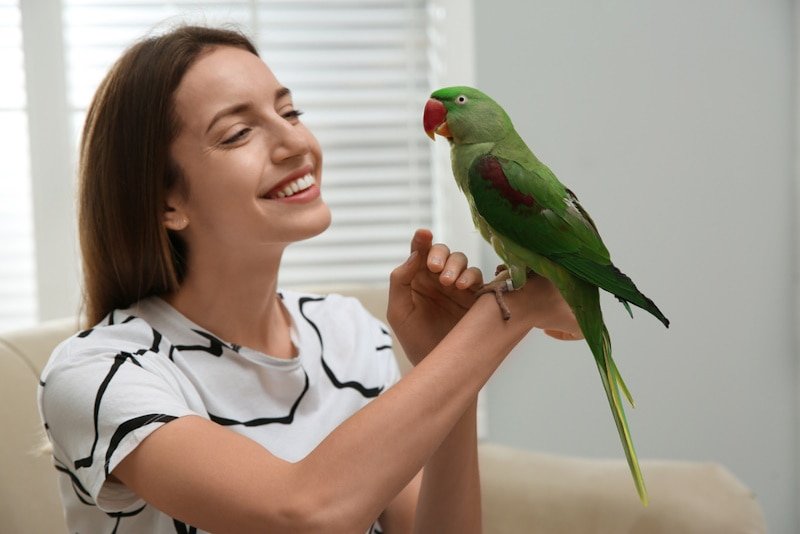
Once she was comfortable taking treats through the bars without hesitation, I began the same process with the cage door open, letting her choose to approach my hand rather than reaching toward her. This step alone took a couple of weeks of consistent short sessions before she’d reliably step toward my hand for a treat.
A few things that helped during this stage:
- Keeping sessions short, just a few minutes at a time, rather than pushing for longer interaction before she was ready
- Staying at her eye level or below rather than looming over the cage, which can feel threatening to a bird
- Ending each session on a positive note, ideally right after a successful small interaction, rather than pushing until she became stressed
Reading Body Language Along the Way
Learning to recognize her stress signals, feathers pinned tightly to her body, rapid breathing, or retreating rather than approaching, helped me know when to back off during a session rather than pushing through discomfort. Conversely, relaxed feathers, curious head tilts, and voluntary approach were all signs that indicated genuine progress and comfort building.
Consistency Matters More Than Intensity
Short, calm, consistent daily sessions built trust far more effectively than occasional longer attempts. Skipping several days and then trying an extended bonding session didn’t recreate the same progress, if anything, inconsistent interaction seemed to slow things down compared to shorter but genuinely daily engagement.
Celebrating Small Milestones
The first time my lovebird voluntarily stepped onto my finger without any treat involved, just because she chose to, felt like a genuinely significant moment after those first two frustrating weeks of retreat and avoidance. Recognizing and appreciating these small milestones, rather than only focusing on some eventual “fully bonded” endpoint, made the gradual process feel more rewarding along the way rather than just a means to an end.
What I’d Tell Someone Starting This Process
If you’re a few weeks into bonding with a new bird and feeling discouraged that progress seems slow, that timeline is genuinely normal for many birds, especially those coming from an unfamiliar or stressful previous situation. Patience, consistency, and paying attention to your specific bird’s comfort signals matter far more than any single technique. The trust that eventually develops, once it does, tends to be far more solid and genuine than anything rushed would have produced.