How to Clean a Bird Cage Properly
For the first several months of owning my bird, my cleaning routine amounted to changing the cage liner every few days and calling it done. It wasn’t until she developed a minor respiratory issue, one my vet linked partly to cage hygiene, that I actually sat down and learned what a proper cleaning routine involves. The wake-up call was uncomfortable, but the routine I built afterward made a genuine difference, both in her health and in how much less overwhelming cage cleaning became once it was broken into manageable steps.
Why Cage Cleanliness Matters More Than It Seems
Birds have sensitive respiratory systems, more sensitive than most people realize. Dust, dried droppings, and bacterial buildup in a poorly maintained cage can contribute to respiratory issues, skin problems, and general stress over time. Unlike some pets where occasional deep cleaning is enough, birds genuinely benefit from a consistent, layered routine, daily, weekly, and periodic deep cleaning each serving a different purpose.
Daily Tasks
Change the cage liner or clean the tray. Droppings accumulate quickly, and letting them sit for multiple days creates both odor and a genuine bacterial concern. I now do this every single morning, it takes under two minutes and prevents buildup from ever becoming a bigger job.
Wash food and water dishes. Leftover wet food, especially fresh vegetables, spoils quickly and can grow bacteria within hours. Rinsing and refilling water daily, and washing food dishes with warm water before each new feeding, is a small habit that matters more than it seems.
Spot-clean visible mess on perches or cage bars. A quick wipe-down of any obviously soiled spots keeps things from accumulating into a bigger cleaning task later.
Weekly Tasks
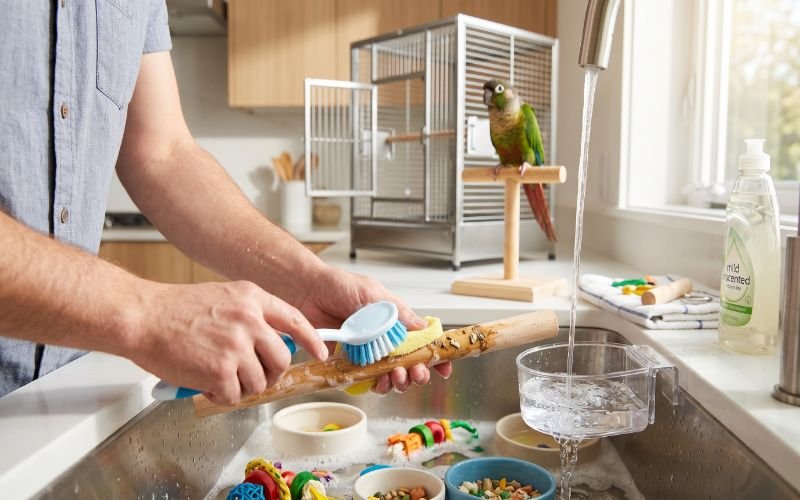
Wash all perches, toys, and accessories. Warm water and a bird-safe cleaning solution, or plain water and gentle scrubbing for less soiled items, should be part of a weekly routine. I rotate through a portion of the cage’s toys each week specifically so I can properly clean whatever isn’t currently in use.
Wipe down cage bars thoroughly. Droppings and food residue tend to build up on bars over the course of a week even with daily spot cleaning. A proper wipe-down with a bird-safe cleaner removes buildup that daily maintenance alone misses.
Vacuum or sweep the area around the cage. Scattered seed hulls, feathers, and food debris accumulate around most cages quickly. Keeping the surrounding area clean also reduces pest attraction, something I learned the importance of after noticing a small ant problem near my bird’s feeding area early on.
Monthly or Periodic Deep Cleaning
Fully disassemble and scrub the entire cage. This means removing all perches, dishes, and toys, and giving the cage itself a thorough scrub, including corners and joints where grime tends to accumulate unnoticed. I set a recurring reminder for this since it’s easy to let slide without one.
Disinfect with a bird-safe solution. A diluted vinegar solution or a specifically bird-safe disinfectant works well for this deeper clean. Avoid harsh household cleaners, bleach residue or strong chemical smells can be genuinely harmful to a bird’s sensitive respiratory system if not rinsed extremely thoroughly.
Inspect for wear and damage. Deep cleaning is also a good opportunity to check perches for excessive wear, toys for damage that could become a safety hazard, and the cage structure itself for any rust or damage that needs addressing.
What to Avoid When Cleaning
Strong chemical cleaners or air fresheners near the cage. Birds are far more sensitive to airborne chemicals than most pets, and products that seem harmless for general household use can cause genuine respiratory distress. Sticking to bird-safe cleaning products, or simple diluted vinegar solutions, is the safer route.
Cleaning while your bird is directly in the cage. Moving your bird to a separate, safe space during deep cleaning avoids stressing them with the noise and disruption, and prevents any risk from cleaning product fumes even when using bird-safe options.
Building a Routine That Actually Sticks
What made the biggest difference for me wasn’t any single cleaning technique, it was breaking the task into daily, weekly, and monthly layers instead of treating “cleaning the cage” as one big undertaking I’d put off. The daily tasks take just a couple of minutes and prevent things from ever building up into an overwhelming deep-clean situation.
Since building this routine, my bird hasn’t had another respiratory issue, and honestly, the cage looks and smells noticeably better on a day-to-day basis too. It’s a small time investment that pays off in both health and general pleasantness of having the cage in your home.