Best Cage Accessories for a Happy Bird
My first trip to a pet store to set up my bird’s cage ended with me buying almost everything that looked colorful and fun, a full bag of assorted toys, several perches, and a couple of items I genuinely can’t remember the purpose of now. A few months in, I noticed my bird consistently ignored most of it in favor of two or three specific items. That experience taught me a lot about the gap between what looks appealing on a store shelf and what a bird actually finds valuable.
Here’s what genuinely earned its place in my bird’s cage, based on trial and error rather than what simply looked good in the store.
Varied Perches, Not Just the Default Dowel
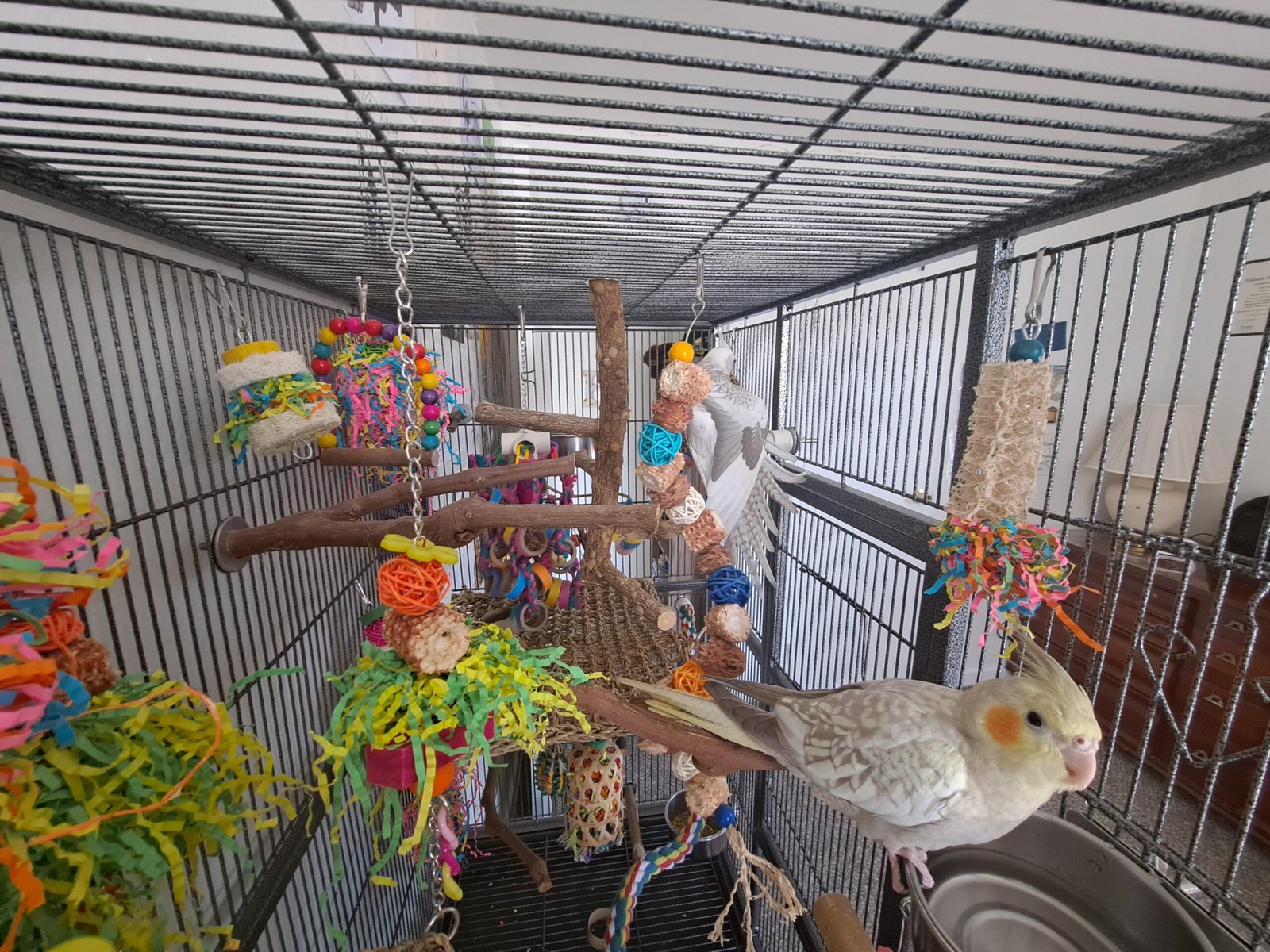
Most cages come with a standard wooden dowel perch, uniform thickness, smooth surface. While fine as one option, relying on it exclusively isn’t ideal. Natural wood perches with varying diameters and slightly rough texture help exercise foot muscles more naturally than a uniform dowel, mimicking the varied branch thicknesses a bird would encounter in the wild.
Rope perches added some welcome variety for my bird too, softer underfoot and good for resting spots, though I rotate them out periodically to check for fraying, since loose threads can pose a safety risk if a bird’s foot or beak gets caught.
Foraging Toys
This turned out to be the single most valuable category of accessory for my bird, genuinely more than any other single item. Foraging toys, ones that require a bird to work, chew, or manipulate something to access a hidden treat, tap into natural instincts that a food bowl simply doesn’t engage. My bird’s engagement level with foraging toys versus purely decorative toys wasn’t close, foraging items got used daily, decorative ones were often ignored within a week.
Chew Toys Appropriate to Beak Strength
Different species need genuinely different chew toy sturdiness. A toy designed for a budgie won’t hold up to a macaw’s beak, and a toy built for a large parrot might be too bulky or hard-textured for a smaller bird to engage with comfortably. Matching chew toy material and size to your specific bird’s beak strength matters more than picking whatever looks appealing on the shelf.
Swings
This was one of the pleasant surprises. A simple swing, something I almost skipped as an unnecessary extra, turned out to be one of my bird’s favorite additions. Movement-based accessories like swings provide a different kind of physical engagement than static perches, and many birds genuinely enjoy the motion.
Mirrors: A Common Mistake Worth Mentioning
This one surprised me. I initially added a mirror assuming it would provide company or entertainment. For many bird species, especially social parrots, mirrors can actually create a problematic attachment, where the bird bonds with its own reflection as if it were another bird, sometimes leading to frustration or reduced interest in actual human interaction. I removed mine after noticing this pattern developing and saw improved engagement with me shortly after.
Cuttlebone or Mineral Blocks
For species that benefit from supplemental calcium, budgies and cockatiels among them, a cuttlebone or mineral block is a simple, low-cost addition that supports both nutrition and provides a mild chewing outlet. It’s not an exciting accessory, but it’s one of the more genuinely useful ones from a health standpoint.
What I’d Skip Next Time
Looking back, several of the initial purchases, brightly colored plastic toys with no real interactive element, ended up mostly ignored. If a toy doesn’t involve movement, foraging, or a genuine chewing outlet, it’s worth being skeptical about how much actual value it will add, regardless of how appealing it looks on a store shelf.
Rotating Accessories Regularly
Perhaps the biggest lesson from all of this wasn’t about any single accessory, it was learning that novelty matters. Leaving the same toys in the cage indefinitely, even genuinely good ones, leads to reduced engagement over time. Rotating a portion of the cage’s toys and accessories every week or two kept my bird’s interest noticeably higher than a static setup ever did.
Building a Setup That Actually Gets Used
The real lesson from my overstuffed first shopping trip was learning to prioritize function over appearance. A cage with fewer, well-chosen accessories that genuinely engage your specific bird’s instincts will do far more for their wellbeing than a cage crowded with items that look appealing but go untouched. Pay attention to what your own bird actually responds to, and build around that rather than what simply looks good in the store aisle.