How to Choose the Right Cage Size for Your Bird
When I bought my first bird cage, I picked one labeled “suitable for small to medium birds” without digging much deeper, trusting the label to have done the thinking for me. It wasn’t until a few weeks in, watching my cockatiel barely able to fully extend her wings without touching the bars, that I realized the label was technically accurate but practically inadequate. Upgrading to a genuinely appropriately sized cage made a visible difference in how active and settled she became almost immediately.
Here’s what I’ve learned actually matters when choosing cage size, beyond just trusting the packaging.
Bigger Is Almost Always Better
This is the single most important principle, and it’s the one pet store labeling often undersells. Manufacturers tend to list the minimum size a species can technically survive in, not the size that allows genuine comfort and activity. As a general rule, if you’re deciding between two cage sizes, go with the larger one your space and budget allow.
Think in Terms of Horizontal Space, Not Just Height
A common mistake, one I made myself, is focusing on how tall a cage looks rather than how much horizontal room it provides. Birds generally fly and move horizontally more than vertically, so a tall, narrow cage often provides less usable space than a wider, shorter one, even if the total volume looks similar on paper.
General Size Guidelines by Bird Type
These are rough starting points, not strict rules, since individual bird activity levels and specific species needs vary:
Small birds (budgies, canaries, finches): At minimum, a cage around 18 x 18 x 18 inches, though larger is genuinely better, especially for more active species like budgies.
Medium birds (cockatiels, conures, small parrots): Generally need something closer to 24 x 24 x 24 inches or larger, with enough room for a few different perch placements.
Large birds (African Greys, Amazon parrots): Often need cages in the range of 36 x 24 x 48 inches or bigger, prioritizing width for wing extension.
Extra-large birds (macaws, large cockatoos): These typically need substantial enclosures, often 36 x 48 x 60 inches or larger, sometimes closer to walk-in aviary setups for genuinely comfortable long-term housing.
Bar Spacing Matters as Much as Overall Size
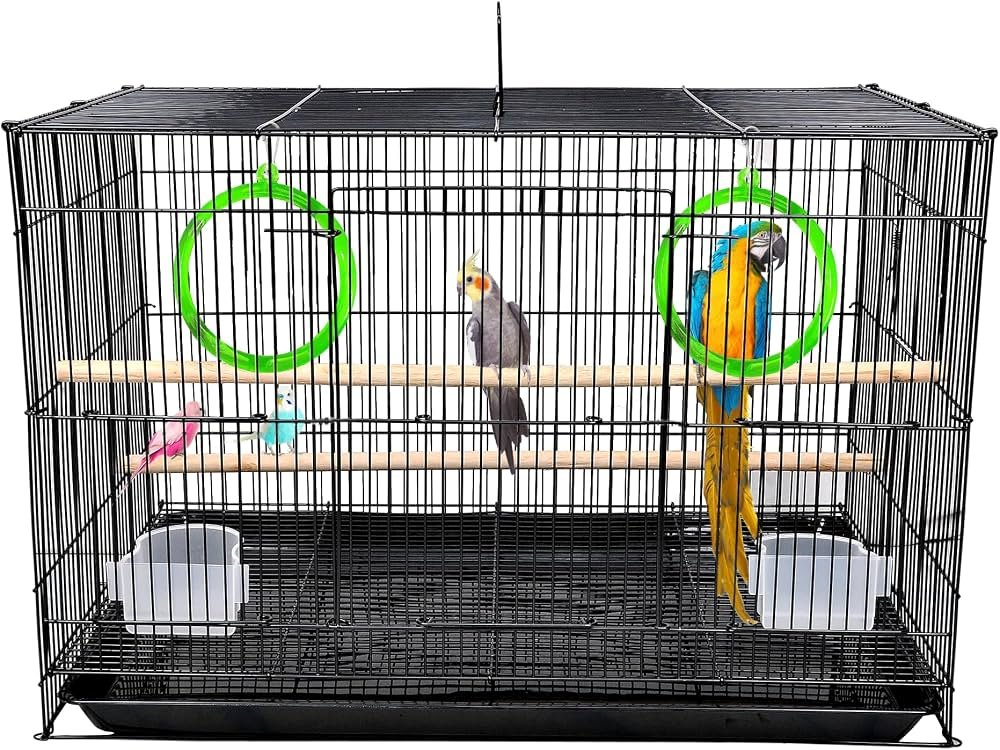
This is a detail that’s easy to overlook but genuinely important for safety. Bar spacing that’s too wide for a small bird risks head or body entrapment, while spacing too narrow for a species with a strong beak, like larger parrots, doesn’t provide the chewing outlet they need and can lead to damaged beaks over time trying to work at bars that aren’t meant for that. Always check the manufacturer’s recommended bar spacing for your specific species.
Multiple Perches at Different Heights and Thicknesses
A cage that’s technically large but has just one or two identical perches doesn’t provide the same benefit as one with varied perch placement. Different perch thicknesses and materials help keep foot muscles healthy and give your bird more natural movement options throughout the cage.
Leaving Room for Toys Without Overcrowding
A well-sized cage should have enough space for toys, foraging items, and food and water stations without feeling cramped or limiting movement. If your bird’s cage feels crowded once you add appropriate enrichment items, that’s usually a sign the cage itself is undersized, not that you need fewer toys.
Considering Future Growth or Additional Birds
If you’re getting a young bird or considering adding a second bird down the line, it’s worth planning cage size around that future need rather than just current requirements, since birds often outgrow starter setups faster than new owners expect.
What I’d Do Differently
Looking back at my own experience, I’d have spent the extra time researching actual space needs for my specific species before buying, rather than trusting a general label. The upgrade cost more than my first cage did, but the difference in my bird’s activity level and overall demeanor made it clear the investment was worth making from the start rather than after the fact.
If you’re currently choosing a cage, err on the side of more space than you think you need, prioritize width over height, and double check bar spacing against your specific bird’s size. It’s one of the easiest ways to set your bird up for a genuinely comfortable life from day one.